
GLP-1: The Key Behind Weight Loss
Obesity is a sub-health issue that plagues many people today, and the history of humanity's struggle with obesity is also the history of the development of weight-loss drugs.
A Century of Carbohydrate Metabolism: From Insulin to GLP-1
When it comes to the mechanism of action of semaglutide, whether in terms of its origin in diabetes treatment or its weight-loss function, it cannot be separated from the topic of carbohydrate metabolism.
The journey of carbohydrate metabolism research is full of breakthroughs and innovations, one of the most revolutionary discoveries being the discovery of insulin. In 1921, Banting and Best first confirmed the blood sugar-lowering effect of insulin in dogs by ligating the pancreatic duct and extracting pancreatic extracts, bringing hope to diabetic patients.

Canadian scientists Banting and Best
By the end of 1922, scientists quickly discovered another hormone that antagonizes insulin—glucagon—from the details of the above metabolic experiments. It functions oppositely to insulin, raising blood sugar levels in the body.
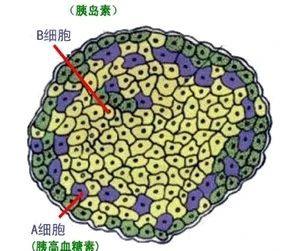
Insulin and glucagon are released by islet A cells and islet B cells, respectively
Interestingly, oral glucose stimulates a greater insulin secretion response than intravenous glucose. In 1932, scientist La Barre named this additional effect the "incretin effect," with the unknown substance causing this phenomenon being called an "incretin."
As research into this phenomenon continued, in 1971, scientists isolated the first incretin—glucose-dependent insulinotropic polypeptide (GIP)—from the small intestinal mucosa. In 1985, glucagon-like peptide-1 (GLP-1) was also isolated from the intestinal mucosa, becoming the second and, to date, the last incretin discovered.
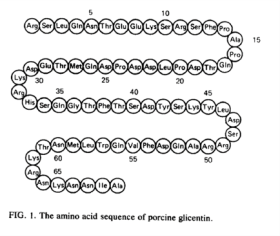
GLP-1 (Glucagon-like peptide-1)
GLP-1 plays an important role in both blood sugar regulation and weight management. GLP-1 can stimulate insulin secretion, inhibit the release of glucagon, and enhance satiety by delaying gastric emptying, thereby helping to control food intake.
Insulin and GLP-1 complement each other in carbohydrate metabolism. Insulin directly promotes the uptake of glucose by cells, while GLP-1 helps regulate blood sugar and weight through multiple pathways, including promoting insulin secretion and reducing appetite.
Metabolic Effects of GLP-1: Both Blood Sugar Lowering and Weight Loss
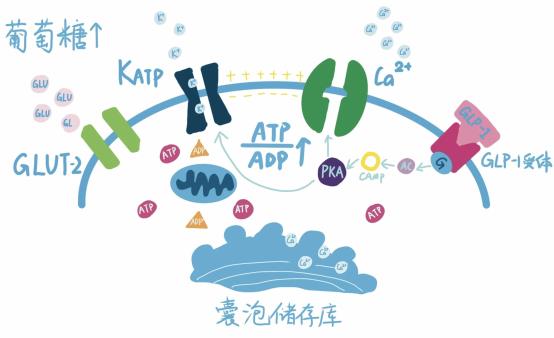
Incretin Effect of GLP
When plasma glucose concentration is sufficiently high, GLP-1 from the gut binds to GLP-1 receptors on pancreatic β-cells, triggering a series of complex regulatory and signal transduction cascades within the cell, which in turn promote the exocytosis and release of insulin granules, lowering blood glucose levels.
The key is the activation of the GLP receptor by GLP, which acts like a switch to initiate intracellular signal transduction, thereby activating related carbohydrate metabolism in the body.
Diverse Metabolic Effects of GLP-1
Since GLP-1 receptors are distributed in many tissues and organs in the human body, its metabolic regulation is very diverse, including vasodilation, heart protection, and promotion of renal excretion.
Of course, its most well-known functions are still its effects on the small intestine and fat cells, lowering blood sugar and lipids, and promoting fat breakdown. Therefore, a "gastrointestinal-centered" concept for the prevention and treatment of diabetes/obesity has been formed around the functions of GLP-1.
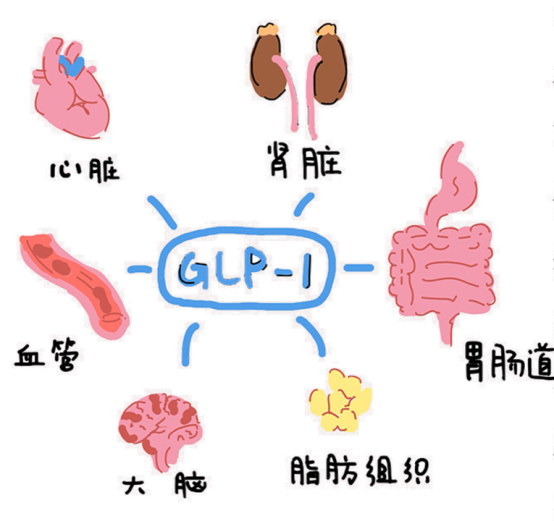
GLP-1's Widespread Effects in the Body
Promoting Insulin Secretion: When blood sugar levels rise, GLP-1 binds to GLP-1 receptors on pancreatic β-cells, promoting insulin secretion to help lower blood sugar.
Promoting Weight Loss: GLP-1 not only helps regulate blood sugar but also promotes weight loss through multiple mechanisms, such as regulating appetite, increasing satiety, and reducing food intake, helping to control weight. For obese patients, these effects of GLP-1 can significantly reduce weight and improve insulin sensitivity.
Drug Development Based on GLP-1: Even Lizard Saliva Works?
In healthy gastrointestinal tracts, GLP is secreted specifically by L-cells, and a peak in GLP secretion occurs after meals, on top of the basal secretion.
However, in diabetic patients or obese individuals, postprandial GLP-1 secretion is reduced, leading to decreased blood sugar control, metabolic abnormalities, and abnormal appetite control, further exacerbating diabetes and obesity problems. Therefore, drugs developed based on GLP-1 have shone brightly in the field of treating diabetes and obesity.
However, the short half-life of GLP-1 limits its direct application. If only human GLP is supplemented, it will be quickly degraded by enzymes in the body and cannot function effectively for a long time. Therefore, scientists began to explore how to extend the duration of action of GLP-1 drugs.
Extracting Non-Human GLP-1 Receptor Agonists
Scientists initially extracted a peptide similar to human GLP-1, called Exendin-4, from the saliva of the Gila monster (*Heloderma suspectum*), which can also stimulate insulin secretion and lower blood sugar.
Through synthetic modification, scientists successfully developed exenatide, which is used to treat type 2 diabetes. The long-acting characteristics of exenatide make it an important drug for diabetes treatment, helping patients better control their blood sugar levels.
Modifying Non-Human GLP-1 Receptor Agonists
With the development of structural biology, synthetic biology, and other technologies, human GLP-1 drugs have also been developed. These drugs involve modifications to one or more sites in the natural GLP-1 amino acid sequence (such as adding fatty acid side chains or forming fusion proteins) to extend their duration of action and evade enzymatic degradation and renal filtration.
Common long-acting GLP-1 receptor agonists include liraglutide and semaglutide, which have shown good efficacy in clinical practice and typically require only a weekly injection, making them convenient for patients to use.